Wednesday, July 18, 2012

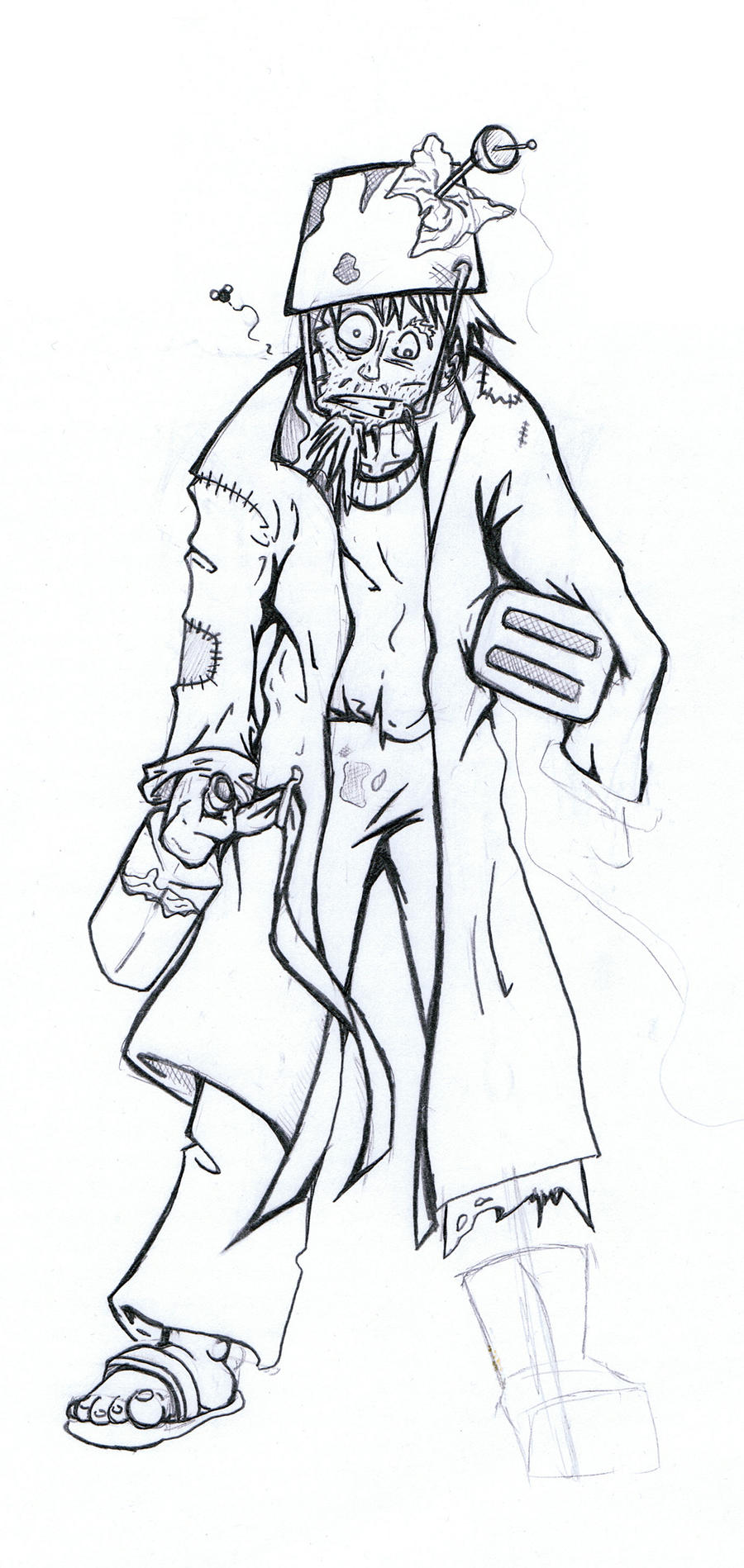
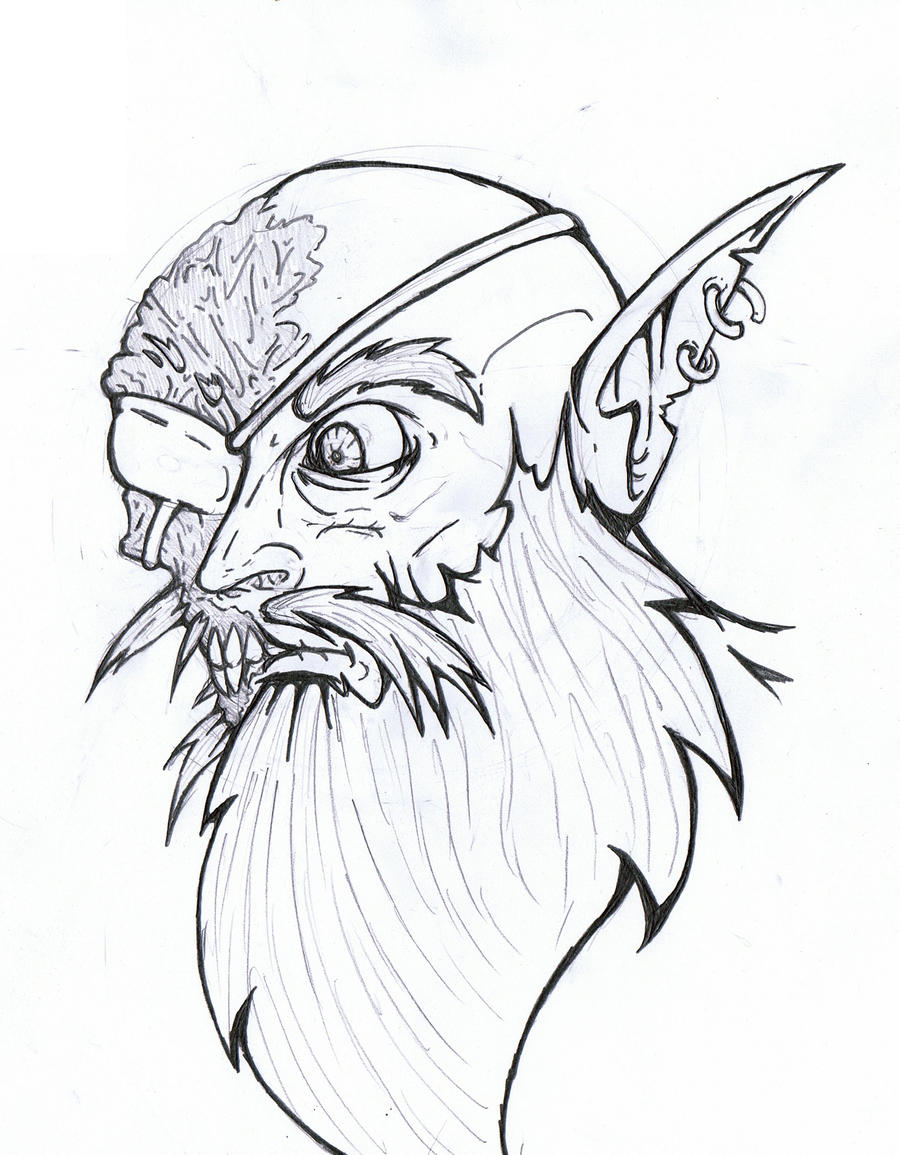
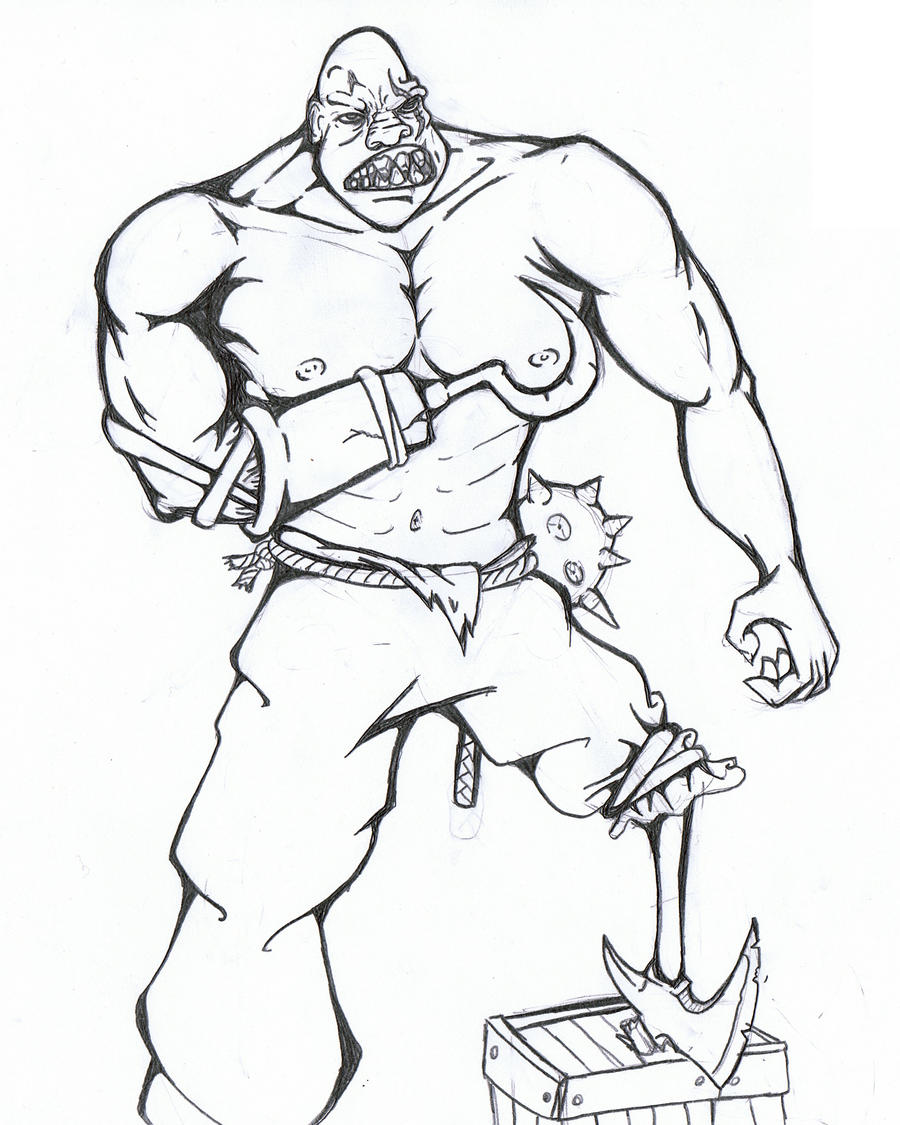
Sketches I made at work

Just a few sketches I found and scanned while moving.

The first couple here are villains from a brief pirate-based playtest I ran for Battle Royale.


These next two are a bit less clear. You ever find something you did a while ago and you can't figure out why? Or what the hell inspired it?


Monday, July 9, 2012

Another Shallow Review: Hell on Earth Reloaded


So, is horror-slash-fantasy-slash-steampunk-slash-western not enough for you? Then what about some horror-slash-fantasy-slash-dieselpunk-slash-western-slash-post-apocolyptic RPG gaming? Well, then perhaps you're the target audience of Deadlands' Hell On Earth setting.

I'm a big fan of Deadlands, if you recall the first full-length campaign I've ever completed was a Deadlands game and it was a hell of a good time. So once I heard today that Pinnacle was releasing their post-apocalyptic version, Hell On Earth, as for Savage Worlds then I was all over it. So far I've only skimmed it but just like the Savage Worlds Horror Companion I figured I'd give my first impression chapter by chapter. 

Introduction

For such a nutty, kitchen-sink setting Deadlands has always had a rather complicated to justify it's zombie cowboys on steamcycles. It's interesting stuff but I often steal from far too many different sources to keep the canon intact. Besides I already know the general background (ghost rocks fall, everybody dies) and I'm just doing a quick skim to make sure I got my money's worth so I'm skipping most of it for now.

However, the writers should be commended for how completely they address various important setting issues such as "what is used as money?" or "are there still any satellites" and how people get around the place after the disaster.

Definitely an interesting read and probably pretty essential if you want to run the setting without any modification but for now let's move on.

Makin' Heroes

Character creation is pretty familiar, no big changes and it'll be even more familiar with it if you've got experience with the original Deadlands Reloaded. All the g's are removed from skills and you've got some familiar Hindrances along with some new ones like Rad Intolerance and Mutations. All good fun.

Now one of the things I liked most about Deadlands Reloaded was that a lot of it could be used for other settings. Many of the Edges were useful for other settings and they weren't at afraid to play around with the Arcane Background rules and came up with a lot of interesting variations that could easily be used in other ways. The hucksters for instance make a good set of "wild magic" spellcasting rules and the Blessed were an interesting departure from the regular Powers-and-power-points rules.

Unfortunately so far Hell On Earth doesn't quite seem to share that potential. The majority of the Edges are pretty setting-specific things like Rad Resistance or starting off with a car. I was especially interested in the Kung Fu edge because the martial arts rules from Deadlands Reloaded were very useful for other games. Unfortunately it's clear that the rules here are meant to work with Hell on Earth's higher tech level. The Kung Fu abilities range from "Too powerful for non-fu
turistic settings" to "too powerful for any setting". Mainly because a lot of them don't actually involve martial arts or even hand-to-hand combat. A cyborg cowboy with a laser pistol is just as likely to benefit from Kung Fu as an unarmed fighter, probably more because the cowboy has the benefits of his weaponry on top of it. The worst is that one of them grants the Hardy advantage, which anyone familiar with Savage Worlds should know is way too powerful to give away as just an Edge.

Equipment

Now, the equipment chapter I quite like. It's full of some useful gear for modern or close futuristic settings like specialty ammo, modern body armor and so on.

In general when it comes to near-future settings like post-apocalypse and cyberpunk gear tends to go two ways. Either they take into account the march of current technology (see the most recent edition of shadowrun where everything went wireless) or they go with the future of the past. Technology that, while futuristic in style, is often fairly unimpressive compared to actual modern devices. Hell On Earth is definitely of the second category which I find quite nice. It's got a kind of odd charm to it and much of it makes some sense when you think about it (after all most smartphones can't survive being sat on much less a supernatural apocalypse. So what's left is the clunkier and more durable bits of tech and things cobbled together from bits and bobs.

That said some of the more advanced equipment is fairly unimpressive. Compare for instance the gyrojet rocket pistol (2d6+2 damage, 24/48/96, half damage vs armored targets) to the Peacemaker (2d6+1 damage, 12/24/48, AP 1). Now, the gyrojet has slightly higher damage (very slightly) and impressive range it's six times as expensive and much more expensive to reload not to mention even a leather vest would render it useless.

But like I said, for the most part the equipment is solid and useful. The vehicle rules especially are going to be a godsend for a lot of Savage Worlds players who might be looking for some rules on tinkering with or customizing their vehicles. It's far from completely comprehensive but it's a good start.

Setting Rules

This extremely short chapter doesn't have much to comment on, except for the scavenging rules which I'm sure will see plenty of use and seem quite serviceable, although I probably would limit the scavenging to one player with others aiding them (otherwise players are likely to rack up huge hauls).

No Man's Land

So here we have the setting's Arcane Backgrounds. You've got a pretty big variety, Doomsayers (mutant radiation priests), Junkers (techno-wizards), Sykers (psionicists), Templars (holy knights), Toxic Shamans (shamans of pollution and garbage). You've also got the harrowed who are basically unchanged from the original Deadlands.

Unfortunately unlike the basic Deadlands setting the Hell On Earth ABs are pretty darn setting-focused. The Junkers are far more powerful than your average mad scientist for example and Toxic Shamans and Doomsayers are tied integrally to the setting. The Templars seem like your average Miracle wielders but they get a selection of Edges that make them truly impressive when battling evil. They might work in a modern setting (think the Knights of the Cross from Dresden Files) but otherwise they're far too kick-ass in for most settings. Psykers are amusing (baldness is an unfortunate side-effect of their powers) and they have some good new powers (like the ability to wipe memories or mentally communicate).

The powers are fairly useful and can easily be harvested for your own use or used as-is just fine. The only one that struck me as odd was the Slow Burn power (designed for Psykers to bust up heavily armored vehicles and the like). Unfortunately it doesn't actually work very well. For instance against a toughness 10, armor 70 vehicle the power inflicts 5d10 damage...now the probabilities of dice in savage worlds can be tough to calculate but to beat 80 on a 5d10 is still pretty damn astronomical odds. Also, as written it can't even hurt an unarmored target. But otherwise some fairly useful stuff and the AB's are fairly well-designed for the setting.

Marshall's Section

There's some pretty interesting stuff going on here. We've got weird weather, rules for mutations and fear levels. All of it seems okay.

Then we've got the setting info for specific cities and locations throughout the West. I don't have anything like the time needed to actually read through all this yet but what I do see is fairly interesting.

Then afterwards we've got a big collection of monsters. Some mutated, some mechanoid, some undead and some all three at once. Again, it looks serviceable but far too detailed for me to plunge into yet.

Quick Overview

There's a couple of things that bear mentioning in regards to the quality of the book. First, the art is quite nice and although there's plenty that was probably recycled from older Hell On Earth books it's all cool and evocative. Unfortunately the layout is pretty rough. The gear is pretty awkward (the tables of gear stats are all clustered at the end of the chapter) and the No Man's Land chapter is worse. It starts off immediately with one of the arcane backgrounds with no intro or explanation, then jumps to the rules for the Harrrowed, then back to the rest of the Arcane Backgrounds. Then we've got various rules scattered throughout the book like the (extremely bare-bones) bionics rules stuck in one of the city descriptions.

The other thing that bears mentioning is price. For some reason Hell On Earth pretty darn expensive, about 40 bucks for a 200 page book. That's quite spendy when you consider how reasonably priced the core Savage Worlds material tends to be. The Print and PDF package together is over 50 dollars when many companies include PDFs for free with their book (or at least at a very small extra price). All that was too rich for me so I went with the PDF alone which is a better deal at (a still quite high) 25$.

Final Thoughts

 So, all in all it's a pretty mixed bag. There's a lot of stuff in Hell On Earth that's interesting or potentially useful but at the same time it's pretty darn expensive.

If you're a deadlands fan and you know for sure that you want to run or play in a Hell on Earth game then I'd say that the book's definitely worth picking up. You'll have a lot of fun. With minor editing it could easily be adjusted to various levels of post apocolyptic adventures. Some aspects of the setting bear a more than passing resemblance to Rifts for example (notably a high-tech conquering nation-state called the Combine with robotic minions with a skeletal motif).

However, if you're just a general fan of Savage Worlds and you're hoping to chop up the setting to use in completely different games then I don't think you'll find it very worthwhile considering the minimum price of 25 bucks.
Friday, June 22, 2012

Busy Busy

No new posts recently, been busy packing up all the things and moving them to a new place. There's nothing like moving to make you realize just how filthy things have gotten when you weren't looking. So, I'll get back into the swing of things next month once we're re-situated.

In the meantime, check this out if you want something to make you feel warm and fuzzy inside: http://www.buzzfeed.com/expresident/pictures-that-will-restore-your-faith-in-humanity


Tuesday, June 5, 2012

I thought of it first: Stick Warriors Omega Supreme (Ultra)

Bleegh. Just a warning. This post is being made at 4:00 AM while in the month-long process of getting ready to move and suffering from the combined effects of a 4-day cold and insomnia. It may be entirely incoherent.

Side-note: You know you've finally reached "adulthood" when you and your wife get really excited about finding a cheap bottle of nasal spray that works really well to clear up your mutual congestion.

So, this installment of "great ideas that I will never be able to produce" comes courtesy of several days spent playing Angry Birds (I just got my first smartphone) and fevered ideas that grip your mind when you're tossing and turning in bed trying not to wake your wife while you figure out why you can't get back to sleep even though you're exhausted.

The idea being an epic stick figure fighting game. Now, I know that's hardly original. The web loves epic stick figures, everyone knows that.

I could literally watch this all day.

So, that's clearly not a new idea...so what have I got? Well, basically a (hopefully) more unique interface and battlefield. The battlefield being a lot like angry birds, constructed of blocks and shapes of varying materials and durability along with a physics engine to let said materials be knocked around the battlefield. It sounds cool already doesn't it?

Well, lets combine that with a simple way to create your own custom attacks. First premise...every attack has identical DPS (damage per second). You can choose to create a spray of rapid light attacks or one big heavy attack (which is just the difference between rapid tapping or holding down the attack button to "charge") and it all ultimately evens out, assuming all attacks hit. So damage isn't customizable. But just about everything else about the attack is: range (from melee to long range), penetration (to determine how easily it "punches through" materials), width (how "big" the attack is), burst (explosive power at the end of the attack's range) and knockback (how easily the attack sends your opponents and materials flying). All of these can be simply set to sliders or a point/dot/star system that has to balance out for each attack. Each player gets a small pool of attacks (say 4) that they can customize and save, plus one "limit break" special attack that can be charged up or gotten via power-up that either gives you more dots or lets you add weird special features (like homing attacks or damaging status effects, etc).

Now, try and picture what that would look like. You've got a big, wide open battlefield that's both destructible and movable and a nearly endless variety of attacks customized through a few simple values. One guy can spray blasts that cut through stone while the other sends a fireball that blows up and sends everything flying into the stratosphere. Charge up and drive an energy ball deep into the ground where it detonates and collapses the battlefield, then you both burst out and continue whaling on each other. In fact, there should be a mode entirely without health bars. Just two people fighting until they run out new ideas for combos or someone gets carpal tunnel. Record the whole thing as a two-hour youtube epic of stick carnage.

And of course there'd be plenty of opportunity for downloadable content, you could easily have simple costumes, or themes for your attacks (instead of generic bolts or energy balls one guy has guns, another attacks with ice claws!), and of course new levels and so on.

But, of course like I said this is possible the worst mental condition to come up with new ideas in (or is it...the best!?) and there's a pretty good chance that someone could point to 4 or 5 things out there that basically already do what I just described. But here's hoping I'm creative.

Saturday, May 26, 2012

D&D Next review, finale

So, we've looked at monsters, peeked at the GMing tips and thoroughly dissected the "how to play" packet. Let's take a look at the characters.

We've got two clerics, a wizard, a rogue and a fighter of various races. Each character has 4 primary "aspects" their Race, their Class, their Background and their Theme.

Races: The races are interesting, although completely traditional. There's no sign of dragonborn or tieflings here. Probably a good thing, I was pretty ambivalent when they were first introduced as a player race but when they started getting shoehorned into every single setting it got fairly ridiculous. The racial abilities are all familiar to those who played D&D before: elves have keen senses, dwarves are hardy, etc. They make good use of the "advantage" mechanics here.

The first thing one notices upon examining races is that racial abilities are significantly more powerful here. Dwarves for instance, are straight up immune to poison (but how do they get drunk!?) for instance and elves are likewise immune to charm and always have advantage when making perception rolls. there's no indication of what benefits a human receives, but their ability scores are notably much higher than the other races.

They seem to be reintroducing the "subraces" from 2e. We've got a hill and mountain dwarf, and the elf is a "high elf" and halfling is a "lightfoot halfling". There's no sign of what exactly the differences are however.

Class: The classes presented so far are the 4 classics: fighter, cleric, wizard and rogue. I think we're all familiar with them. There's no sign of what other classes will eventually be available but the playing guide notes charisma can serve as a magical ability so presumably we'll at least be seeing some sort of sorcerer/bard thing. The class abilities are all very generic and familiar and we can definitely see the return of vancian magic and almost no sign of 4e's powers (although there's a few holdovers here and there like the cleric's Channel Divinity ability)

It's worth noting that Rogues seem to have had the biggest facelift. They've got a load of abilities, some of them very impressive, like the fact that for any skill they're trained in the minimum result is going to be 10...that's the minimum die result. Meaning that if that halfling rogue wants to make a Stealth check he's rolling a minimum of 16. That's impressive to say the least. They seem to be really trying to push the rogue as the skill monkey again (rather than the "slayer" it was in 4e), although it's worth noting that sneak attacking is much easier than 2e and 3e (all you need is some form of Advantage. At second level the rogue gets the ability to give himself advantage on rolls 2 times a day. The fighter deserves mention as well for the Fighter Surge ability which grants the ability to take extra actions a few times a day at 2nd level. Hopefully this indicates that they'll manage to keep fighters and rogues interesting in comparison to spellcasters.

The rogue and cleric seem to have "subclasses", the cleric is based on the god they worship and the rogue has a "scheme" (in this case thief) which seems to indicate what "kind" of rogue they'll be.

Background: Now here's something new. Your Background is an aspect which is independent of class/race and provides you with your skill training. In the playtest we've got Soldier, Commoner, Sage, Priest and Knight. Theoretically these can be swapped to any class so if you had a wizard who serves the god of magic then you might have a Wizard + Priest, or if a hedge witch you might go Wizard + Commoner. Each background comes with skill training in a selection of skills and a special ability. These abilities range from pretty weak to pretty nice. The Commoner is probably the worst, you get training in 3 skills (where most others get 4) and the "Trade" ability is not at all impressive. This could indicate a serious balance problem (especially since backgrounds are available equally to everyone...why take anything but the best?) but it's far too earlier to say. There could be plenty of things that help to balance stuff out.

That aside I'm very impressed with some of the ideas in backgrounds, most of them seem designed to serve as interesting plot and roleplaying hooks rather than just + X bonuses. They're geared towards social effects and the Sage ability Researcher is an incredible piece of work for just two sentences. Researcher means that if you fail a knowledge roll to recall or learn a fact then you automatically know where you can find the answer (such as the great library of XX or the sage of YY) it's a great idea and something I plan to try and work into other games

However, I'm also concerned with the fact that many of these abilities are so socially based that it "locks you in" to a single ability. For instance, you've got a commoner...what happens if later on you accomplish a major mission for the king and are knighted...do you gain the Knight background and lose all your commoner abilities? What about a Knight or a Priest who (in the course of the game) is cast out from their order or is otherwise prevented from taking advantage of their abilities...can they change backgrounds? what happens to their skills? These are questions that I hope will be answered in time.

Theme: Theme, like background, is a general trait that can be added to any class. They seem to fill the "character role" niche. For instance you've got the Guardian theme which is the shield-toting defender type who can protect others, the slayer is good at killing folks, etc. Again these range from relatively weak (the Slayer theme, which means that if you miss you inflict a small amount of damage anyway) to really powerful (the Healer theme, which maximizes all healing rolls you make, lets you make cheap healing potions and maximizes recovery for your allies). However, it's far too early to say for sure since the themes seem designed to increase in power as you level up.


Overall: I like a lot of what I'm seeing. It actually resembles a fusion of 2e and 3e so far, with a dab or two of 4e here and there. Time will tell if this is good or not. Looking through the classes I have only one big concern and that is in regard to multiclassing and flexibility. The theme and background should let you customize your individual fighter or wizard easily...but I'm not sure how they'll be handling multiclassing or the ability to start gaining new skills or abilities later in play. This is one of the things I really liked about 3e. If, after playing for several levels, you decide you'd like your fighter to invest a little bit in a side ability like stealth or even spellcasting, you can just pop a level into another class or even just pick up a different feat or set of skills. We'll see.

Final Thoughts


So, there's not a huge amount to go on but my first impression is cautiously optimistic. I'm not seeing a lot of the flags that turned me off of 4e and I'm seeing a lot of really impressive new ideas and little tricks to make things interesting. I can definitely say I plan on buying it when it comes out, but I can't say for sure if I'll invest in it as a primary system. That said, I think we'll need to see a lot more unique stuff before 5e becomes really successful, there's a lot of markets right now. So far here's what I think you'll think: 

If you don't like D&D: This product is not for you. This is still D&D to the core and if it didn't appeal to you already then you won't find anything new to love here.

If you're a die-hard 4e fan: I don't think you'll like 5e very much. It's got a few trappings stolen from 4e, but overall it rejects the previous edition pretty heavily. I doubt you'll want to switch.

If you're a 3e hold-out: Then you'll probably want to give this edition a try. It's resemblance to 3e is very strong and it looks like there's a definite effort to try and fix some of 3e's issues. 

If you're an old-schooler: You might want to give this a look. It definitely looks like wizards noticed the Old School revival going on and there's a lot of things that indicate that they're trying to appeal to the old guard, 2e and before grognards. I certainly can't say for sure until the game is actually released but it seems like they're trying to recapture the feel of the old-school with some more modern mechanics. The playtest character sheets even mention dropping Background and Theme for an "old-school" feel. Whether this is really worthy or just pandering only time will tell. 

If you're one of the many D&D fans taken by Pathfinder: This is me right now, D&D isn't necessarily my go-to game but when I play I pull out my gigantic Pathfinder book. Is 5e going to displace pathfinder as my game-of-choice...I don't know and I don't think I'll be able to say until I actually get a look at the full book...but I think there's a solid chance it might do the job.


Friday, May 25, 2012

D&D Next playtest review, continued

So, before I jump into the classes themselves let me take a look at the DM packet. It's much shorter than the player version and mostly covers the same material, just from the DM's perspective. So I'll just comment on the things that stand out:

First we've got the DC List of different difficulty classes ranked by how hard they are. Right off the bat I see an issue with the fact that DC 10 is "trivial" and it says "An adventurer can almost always succeed automatically on a trivial task". Now, that's just not true. DC 10 is certainly low but (especially with the smaller modifiers) it's harder near-automatic. It's about a 50/50 chance of success for someone with an average ability score and it's still around a 30% failure chance for someone with a good (+2 or +3) bonus. Seems like DC 5 should be "trivial".

There's also a standard set of rules for hazards (if you fail a check by 10 or more and there's a chance of something bad happening, it happens) and for when checks can be "automatic successes", which seems pretty rare unless there's a lot of modifiers floating around that we're not seeing yet (it requires a bonus of 5 higher than the DC).

Next we've got some generic advice on when to roll dice, how to engage players, etc.

A few rules on what constitutes an "action" in combat (notably things like drawing weapons are no longer actions, not a bad choice) and letting us know that you should always round down.

A few notes on creature sizes. There's an odd mechanic called "fills" which represents how many medium size creatures a large creature counts as for purposes of surrounding another creature. likewise there is an entry for how many medium sized creatures can surround a larger creature. This seems like it's meant to allow players to play easier without a grid, but ultimately it seems pretty unnecessary and certainly more fiddly than needed. I don't think we really need to calculate exactly how many collossal creatures can surround a single medium sized creature. Isn't anything more than 2 overkill at that point anyway? Not to mention that it neglects things like reach and the myriad of bizarre body structures available to D&D monsters. Makes me realize that there's no "flanking" or "back attack" rules so far. Of course I can guess what they would do...give you advantage of course.

Now there's a bit about lighting levels. It mentions being "lightly obscured" and "heavily obscured" but beyond a mention in the player's guide about how you normally have to have "heavy obscurement" to hide there's no indication of what effect these two conditions really have. Perhaps that's all there is?

Next we get a big list of common tasks. This definitely supports the idea that bonuses are going to be smaller. In 3e/4e most DCs were measured in increments of 5's but here it seems like increments of 2. I definitely feel that cluttering things up less with loads of modifiers is a good thing, although I note that this seems like it'll definitely make things a bit more random. Someone with a +5 bonus is capable of some very impressive feats...but is also extremely capable of failing even the "trivial" tasks.

Notably missing from the playtest document is how to handle falling damage. It's a very minor thing obviously (and probably going to be the same 1d6 per 10' it's always been) but it's something that's likely to come up in just about any game.


I'll get to the classes on my next post, but before that I'll skim this bestiary included as well. Let's see...

First impression is that this reads like a hybrid of the 2e and 3e beastiary...with just a smattering of 4e in some of the critter's unique abilities.

Just to dissect one completely:

Creature types: We've got 3e's beasts, humanoids, oozes, etc. That's a good thing, they provided an easy way to "sum up" common critter attributes, and I approve of their continued existence. It also looks like we're seeing the return of the "3x3" alignment grid. I could take that or leave it. I know it leads to endless flamewars but personally I've never found it impossible to ignore. No sign of 4e's "critter roles" like Brute, probably for the best.

HP: We've got just a generic hp entry, no HD. Huh, even 2e had more info than that. I'm not sure how I feel about that. We'll see, could just be a simplified-for-playtest thing. Noting that while many of the minor, yappy monsters have tiny hp amounts some of the big guys do have loads (ogres have 88 hp and minotaurs have 130. wow!)

Ability Scores: A full set of ability scores. This I definitely approve of, it was the best thing 3e ever did to monsters. I'd be very disappointed if they stepped backwards here.

Space, attacks, reach and all the rest seem totally standard for 3e. One difference, a static XP value rather than a CR. Hmm...on the one hand CR was almost completely useless when it came to calculating actual challenges...on the other hand XP is almost certainly not going to be any better and it seems to preclude useful things like templates.

Final impressions:

I'm overall ambivalent here. On the one hand I'm seeing a lot of good stuff, but that good stuff was mostly taking whole from 3e and doesn't involve anything new. On the other hand the lack of HD and the static XP value seem like they're going to make customizing monsters very difficult. Easily customized monsters were a huge benefit in 3e. If you wanted to make an ogre shaman or a crazy goblin alchemist all you had to do was slap on a few class levels or if you wanted something weird just lay on a few templates. One thing I definitely didn't like about 4e was the way that every single creature seemed to have 5 different variations, bloating the monster manuals with needless extra versions of the same damn thing. Just give me one, generic monster and the tools to make it unique if I need to.

That said, I do like some of the abilities I'm seeing in these creatures and some are fairly unique. I especially like the evil cultist's ability to summon tentacles of darkness when they're near an evil altar. That's a legitimately neat ability and one that only makes sense in the hands of a monster (rather than just taking abilities available to players and applying them to a monster). So for now I'll reserve judgement.

I will say that from what I've seen so far that I definitely prefer 3e's poison rules, represented mostly by ability score damage. Generic "poison damage" isn't as interesting or useful, although I can certainly understand that it's more complex.


Thursday, May 24, 2012

D&D Next Playtest Review


It's been a little quiet around here you may notice. That'll be because I'm getting geared up to move out of my current place over the next month. So you might not hear much from me until I'm settled in. In the meantime I just downloaded the playtest documents for the latest generation of D&D and I've been giving it a look over and thought I'd share my thoughts. Before I start I should mention that I know there's a lot more info out there than just what is contained in the playtest documents...but at the same time that's obviously all still up in the air and the playtest document is what Wizards is currently using to represent the state of the game as it stands now so I'll stick to it for the purposes of this review.