Thursday, August 9, 2012

PDQ Week Pt 4: PDQ# and Swashbucklers of the Seven Skies

Now we come to the latest PDQ offering. Technically speaking both of these are really the same game but I'm splitting the info up for reasons that should become apparent. 


PDQ# is the newest "edition" of PDQ. It's not a 2nd edition or a revised edition so much as it's an...alternate edition. Basically when working on Swashbucklers of the Seven Skies Chad incorporated a lot of ideas introduced in various other PDQ books along with several new concepts and by the end of it the final result was something different enough to be considered a new version of PDQ. He made the results of this new "core" system available on his website as PDQ# (or PDQ "Sharp").

Why doesn't this count as a 2nd edition of PDQ? Mostly because PDQ# is very focused on the genre of swashbucklers (of the Seven Skies). Swashes and the buckling thereof are threaded throughout the system. The system introduce a different form of Conflicts called Duels designed to be played out as one-on-one contests between characters as well as Techniques, special tricks or conditions that grant a bonus when using a Quality in a specific manner. 

However, despite the swashbuckling focus PDQ# introduces a ton of ideas that fit perfectly in other PDQ games, so perfectly that it's common for PDQ gamers to incorporate many of these new ideas when playing games designed for the original PDQ. Techniques especially are an incredibly flexible and useful tool to give PDQ characters a few more interesting tricks without really increasing their complexity. 

In addition to swashbuckling PDQ# likes to play around with new ways to get players involved in the action and storytelling. For example, the results of dice rolls (whether success or failure) are normally narrated by the player (although they can always pass the narration off to the GM or another player if they're out of ideas). The other major innovation of PDQ# is Style Dice. Fate/Fortune/Karma points are a very common thing to see in PDQ games, but Style Dice are a new breed, namely because of how they are spent and earned. GMs have two sources of Style Dice to hand out to players. The Bowl is the first and it's for rewarding creativity, flair and coolness but it is also limited by quantity. The Box is the second and it's unlimited, but only used for "mechanical" rewards such as being affected by your Weakness (called Quirks now) or similar misfortunes. However, any dice spent go back into the bowl, encouraging players to spend freely to ensure that the Style Dice economy flows smoothly. 

So even if you're not necessarily interested in running a swashbuckling game, PDQ# is practically required reading (fortunately it's free) for PDQ GMs so they can mine it for new ideas and mechanics. 


That's a cool cover right there. Now I talked about PDQ# earlier partially because if you want you can check it out separate from Swashbucklers of the Seven Skies (what is with PDQ games and the long names?) but also so I could get the mechanical stuff out of the way and jumping into the setting here. Because the setting deserves a lot of attention. 

It's not the first "complete" setting for PDQ (that honor probably goes to Dead Inside) but it's certainly the most fleshed out and robust. Since PDQ games are so player-driven and DIY-oriented mechanically it's no surprise that they have a lot of DIY when it comes to the setting. Most PDQ books are more like toolkits geared towards a certain genre sometimes with a light setting draped around to give things context and provide inspiration. That's not a criticism, it gives a lot of opportunity for freedom and inspiration in a light, compact form. However, at the same time a great setting can be a draw regardless of the system (just look at games like Exalted).

S7S is definitely an interesting and very well-thought-out setting. The magic, the history and the "geography" (areography?) are all well detailed and thorough without being just a massive fantasy atlas. So if you're looking for an original and well-written swashbuckling fantasy setting then I strongly suggest S7S. 

And while most of the game's system innovations can be found in the PDQ# document there are a few original ideas that you can only get in the full version. The most remarkable is the rules for ship-to-ship conflicts. It's a really great mechanic for teamwork and works equally well when taken into different settings (whether it's commanding a starfleet or soldiers on a battlefield). 

My only regret is that I don't currently have much in the way to offer with house rules (so sadly no bonus material today) because I frankly haven't actually had a chance to play a full game, this being the most recent addition to the PDQ family. However, I've made extensive use of the PDQ# rules already by incorporating them into other PDQ games. 

Battle Royale Preview

Since I don't have anything strictly new to add today I'll instead take the opportunity to talk a bit about my own upcoming PDQ game, Battle Royale. It's a game of the "toolkit" variety designed for playing martial arts themed games at a wide range of power levels. 

So with the addition of PDQ# there are now two primary forms of PDQ combat. You've got the traditional Conflicts from regular PDQ and the new Dueling rules from PDQ#. Now the Duel rules are great for adding extra tactical flair to PDQ but they suffer from one major problem...they're designed almost exclusively for one-on-one conflicts (or one PC against a group of Minions) and they aren't nearly as elegant when used in a situation where a larger group gangs up on one or two powerful foes (such as the classic "boss fight" scenario). 

So, while I wanted to keep the new ideas and strategy introduced by Dueling but I didn't want to limit how the players might want to engage their opponents. So I went with the simplest and most obvious solution: use both. Battle Royale will feature both standard PDQ Conflicts but also Bouts, one-on-one battles based on PDQ#'s Dueling rules.


Wednesday, August 8, 2012

PDQ Week, Pt 3: Zorcerer of Zo

Phew, keeping up a post-a-day is rough. Especially the long-winded posts I've been chugging out. So tonight's may be a bit shorter.


Next up we have The (Zantabulous) Zorcerer of Zo. The Zorcerer of Zo is certainly a unique book, even when compared to other PDQ games. In a lot of my previous commentaries I talked about how the product showed you new ways to use the PDQ system and serve as a sort of "toolbox" for the system. Zo is a little bit different. 

Zo uses a version of PDQ known as "the good bits", a trimmed down version of an already impressively compact system. It's designed for maximum ease of play and making sure that the rules fade quietly into the background whenever possible. Instead of playing around with the system Zo is much more concerned with setting and story. 

The setting of the Land of Zo is interesting, drawing upon a variety of pre-existing fairytale ideas and characters and creating new ones by fusing them together. For example you've got the Blue Hood, a conceptual hybrid of Red Riding Hood and Robin Hood. Timothy, a noble talking cat who is a fusion of Puss in Boots and the Marquis De Carabas from Neverwhere. Then you've got the setting's ultimate Big Bad...wolf of course: Shaykosch, the Deathless Wolf. A combination of the obvious Big Bad Wolf and the mythic Koschei the Deathless. The Land of Zo is a great fairytale setting right out of the box which provides enough familiarity to tug at childhood memories but enough novelty to avoid being predictable. 

In addition you've got copious notes from the author on the nature of fairytales, storytelling and happy endings. You've even got about 50 pages devoted to notes on Chad's nearly year-long Zorcer of Zo campaign and notes on his preparation for the games. I cannot recommend the book enough as a great "starter" for anyone new to RPGs, it's got a simple system, a nearly universally appreciated theme and tons of inspirational material. 

And while the book's focus is certainly on setting and style it still manages to slip in some neat new ideas to the PDQ arsenal. It's magic system is unique and simple, although strongly tied to the fairytale theme. I quite like the idea that whenever a character attempts to do magic then magic will happen...it's just a question of whether it does what you wish it to. It also introduces Learning Points (a concept also used in Jaws of the Six Serpents and later in Swashbucklers of the Seven Skies) which are a great form of character development. Learning Points are earned when you fail a Challenge or suffer a setback in a Conflict. This means that characters are rewarded for trying difficult and seemingly impossible tasks, taking on great odds and tackling things outside of their normal skill set. 

Bonus Material: Dark Fairy Tales

Zorcerer of Zo is a refreshingly straightforward and innocent take on the fairytale genre (yes I know that most original fairtales are not nearly so innocent, I don't care). It's a nice dose of nostalgia and sweetness when placed alongside so many other games which twist or deconstruct these stories into darker forms. It's good to see a game that doesn't turn Red Riding Hood into an axe-murderer or wicked fairies into walking fetish fuel. 

So, all that said, I still like some good twisted fairytales from time to time. So here's a few things from a short-lived dark fairytale campaign I ran a few years ago. 

The Characters: These guys might be suitable as monsters or foes in your fairytale campaign...in mine they were the PCs. 
Lump, Ogre Baker

Lump is a huge, ugly brute of an ogre who wears a tiny little chef's hat atop his head. Although he mostly just wants to settle down and be left alone to bake and sell his bread he is often hounded out of towns he comes to because of his hideous appearance and the "secret ingredient" of his bread. This character is sort of a fusion of Shrek, the "grind your bones" giant from Jack and the Beanstalk and a bit of the incredible hulk.

Qualities: Expert [+4] Big and Burly, Expert [+4] Muscles Like Boulders, Good [+2] Baking, Good [+2] Keen Nose, Poor [-2] Dumb Lump

Special Move: Good [+2] Me Stomp! (Big and Burly)

Vort, The Living Poppet
 
Vort is a living doll...but he doesn't exactly fit in at the Island of Forgotten Toys. Vort is in fact a living voodoo doll. Fortunately he doesn't let his lot in life get him down and he's full of pluck and cheer. He also carries around some huge (compared to him) knitting needles. He's a bit of a combination of Pinocchio and the Scarecrow from Oz. 

Qualities:Expert [+4] I do Voodoo, Good [+2] Clever, Expert [+4] Small, Good [+2] Needle-Fencing, Poor [-2] Little Fellow

Special Move: Good [+2] Right in the Eye! (Needle Fencing)

I Do Voodoo is a Gift Quality that allows Vort to suffer a Damage Rank by stabbing himself to make an attack against a target he couldn't normally reach using the Quality. If he has a bit of hair or similar then he could even attack without them being present!

Mad Jack
 
This is a combination of the classic "Jack" of fairytales and the Mad Hatter, he is meant to be the Jack in fact...his many professions and personalities caused by his insanity. He normally appears as a spry, handsome young man who always wears a hat (it doesn't matter what hat, but he'll always insist that it's his and he's had it his whole life). 

Qualities: Good [+2] Handsome, Good [+2] Nimble and Quick, Good [+2] Unusually Persuasive, Good [+2] Fair Hand With a Blade, Expert [+4] Multiple Personalities

Special Move: Good [+2] Lucky Hat (Nimble and Quick)

Multiple Personalities is a Gift that allows Jack to dictate a new, personality-type Quality to replace it at the start of each session. During a session Jack may spend a Fortune Point to swap out for a new personality. So one day he might be Expert [+4] Brave and Bold while another he might be Vicious or Cowardly. 

Mister Boogey

The classic boogeyman (although perhaps mixed a bit with the one from Nightmare Before Christmas). Mister Boogey is a dapper, somberly dressed gentleman who is rail-thin and dark-eyed. He dislikes the light and prefers to lurk somewhere out of the way. He's a merchant and travels from town to town in his rickety cart full of odd and disturbing knick-knacks.

Qualities: Expert [+4] Invisible To Adults, Good [+2] Bug Magic*, Good [+2] Wiry But Strong, Good [+2] Merchant

Special Move: Good [+2] Snatching (Wiry But Strong)

Invisible to Adults is a Gift that means Mister Boogey fades out of the perception of anyone over the age of 14 or so (personality is more important than age though) and is normally unseen unless he draws attention to himself. Bug Magic is a Magic Star Quality that covers numerous magic tricks involving insects...summoning them, talking to them, seeing through their eyes, controlling them and possibly even becoming one. 

Dark Learning Points

This is a concept from Jaws of the Six Serpents that fits dark fairytales very well. Basically Dark Learning points are gained by succeeding at a roll rather than failing...but succeeding at a task that is disturbing or wicked. This works exceptionally well for stories that start more pure and become darker with time. Innocent protagonists might gain Dark Learning Points from stealing or breaking the rules or reading the wrong book...straying off the path. Later they're getting them for shoving witches into ovens. 
Dark Learning Points can either be spent to purchase "tainted" Qualities or abilities with a darker tone (perhaps wicked magic or just unpleasant personality Qualities). Alternatively they could be traded for Fortune Points that can only be used in a wicked way (which often means they'll come back...). 


Tuesday, August 7, 2012

PDQ Week, Pt 2: Silver Branch Games


Chad Underkoffler is the creator and dark lord (just kidding Chad) of PDQ but he's not the only author producing great PDQ material (which is good considering I'm trying to create one myself). The second most prolific member of the PDQ family is Tim Gray of Silver Branch Games. Tim has produced several PDQ games and supplements and I'll give a quick overview here. 


Questers of the Middle Realms is the "lighter side of fantasy gaming". Now, classic high fantasy adventure RPGs are a dime a dozen and D&D parodies are hardly less common but I still feel like Questers is something special. First and foremost it doesn't fall into the most common trap parody games suffer from: making everything a joke. A game with a sense of humor is great but it gets tiresome when every monster is a walking pun and every sword swaps your gender and hair color or makes a farting noise when you smack someone with it. Questers has a sense of humor but it's more than just a bare-bones RPG thinly wrapped in a lame joke book. If you felt like it you could ditch a few of the goofier monsters, slightly change a few locations and you'll find yourself with perfectly serviceable and interesting fantasy setting. 

One of my favorite parts of the book is the unusual take it has on the standard D&D fantasy races. Elves for instance are not simply long lived or ageless, they're actually highlander-esque immortals. Only complete dismemberment or destruction of their bodies will permanently put them down. As a result of their immortality they suffered from a massive population explosion, leading to the gods creating Orcs as ideal elven predators to hunt down and eat the pointy-eared bastards. Quester's contractually required "tiny folk", Hoblings, also have the best racial disadvantage ever. Forget stat penalties or reduced damage...they're delicious

The second great thing about the book is that Tim is not afraid to play around with the PDQ system and really see what it can do. While Truth and Justice is how I got started with PDQ it was Questers that actually made everything really "click" for me and showed me just how much this little system could do. Questers has all kinds of interesting and intriguing mechanics that can be used not only for Questers but just about any PDQ game. It has special rules for Racial Qualities, rules for the use of Props that are basically "free-floating" Qualities not tied directly to a character which can represent everything from magic swords to loyal mounts to sacks of cash. Questers and it's Book of Bewildering Beasts supplement provide the largest collection of pre-statted PDQ critters out there. Obviously it's easy enough to whip up your own but Questers still provides a great set of tools or templates to make the process even faster.

For me the shining jewel of QMR is the magic system. Even though it was released back in 2006 it still remains my favorite choice for PDQ magic. It's simple and supremely flexible without overwhelming non-magical characters. You've got Thaumaturgy, your classic wand-and-robes wizardry which can be powerful but potentially unreliable. There's also Mysticism which is a more limited but more reliable set of powers wielded by psychics or zen martial artists. Finally you've got Divine Aid which is not only my favorite god-based magic in PDQ, it's my favorite form of divine magic in any system. It's a system that makes using miracles more than just casting spells using a different mental stat (although amusingly the Qualities that influence miracles are those related to persuasion, fast talking and/or butt kissing) and allows just about anyone to call on a little bit of divine intervention here and there.

Monday, August 6, 2012

PDQ Week, Part 1: Truth and Justice


So it's been a while since I've managed to make regular posts here. I moved last month and with the amount of junk me and my wife have we've needed a month just to get mostly unpacked. There's still lots of work to do before things are actually done but we've also reached the point where we're fine just shoving lots of things into our spare room and dealing with them when we need to. So, I'm looking to get back into a pattern of regular postings here. That brings me to the PDQ system, readers of the blog know I'm a fan of the system and a recent thread over at RPG.net made me realize that I haven't given it much attention recently, certainly not as much as it deserves. 

Attentive readers may also remember that I'm working on an RPG of my own: Battle Royale. Well...I'm working on several actually (DICE and the Drive System are still alive somewhere in the back of my brain) but Battle Royale is going to be my first, serious publication. It's also going to be a PDQ-licensed product, using my own special blend of various PDQ versions to create something that will hopefully be quite a lot of fun. I haven't actually talked much about Battle Royale here in the past mostly because it's been quite hard to find the time to actually give the project the attention it deserves so it's moved on and off the backburner for a couple of years now. 

This has changed recently though. A combination of a new job and a fresh dose of inspiration has spurred things forward significantly in the past several months and now the game is well and truly approaching completion. Well...approaching the final stages of completion at least. We've still got some editing phases to go and we'll see how much reworking it needs. Here's hoping it's not too riddled with flaws. 

So, in the interest of picking up the posting pace here at Zombie Toast, showing some love to the PDQ system and providing some extra info on my upcoming book Battle Royale I'm declaring it PDQ Week here at Zombie Toast. I'm going to provide some info on the different PDQ games out there and help share what the system has to offer. These aren't exactly reviews, you can go ahead and assume that I'm recommending all of these products, they're more just info dumps to help pimp a relatively obscure system (on an extremely obscure blog...but that's a different issue). In addition I'm going to provide some of my own house rules, tweaks and concepts for each of the system. 

So, for our first entry in PDQ week.

Saturday, August 4, 2012

A self-defense arsenal clearly designed for PCs

If there's one thing every RPG player knows it's that the more exotic and interesting a weapon is the better it is. In RPGs deadly assassins duel-wield Desert Eagles and vampires carry around a brace of katanas under their ubiquitous trench coats. So, here's some real-world weaponry that you'll almost certainly have some player try and fob off on you.

Knife: The Wasp Knife

So, what's the most ridiculous, over-powered knife out there? Are we talking some kind of grotesquely oversized bowie sort of thing? Or one of those insane Bud-k contraptions that has a dozen spikes, half of which will try and carve you to bits the moment you use it?

Nope, the Wasp knife is a fairly small, unassuming little thing. However, notice those three cartridges? Those are compressed air cylinders which are loaded into the knife and released through a vent that runs along the blade and out of the tip. The knife was apparently originally designed to defend against underwater predators like sharks...but it's equally effective against it's natural prey: the watermelon. Now, who can watch that without imagining the potential...especially with a bit of creativity (imagine a Wasp spear!).

And of course since the compressed gas instantly cools to below-freezing when released the knife obviously inflicts additional Cold damage as well. Of course, on the downside you've invested in the only knife you need to reload.


Handguns: The Pfeifer Zeliska .600

No, that picture isn't photoshopped. That's the Pfeifer Zeliska .600 Nitro Express. It's a handgun that's as hard to lift as it is to pronounce. The gun is 16 lbs and is pretty much the most powerful handgun in the world...it probably makes a pretty effective blunt instrument too.

Now, if the sheer size and weight don't indicate just how utterly ridiculous this weapon is then check out the picture to the right. That's the bullet. This is a handgun that fires elephant gun rounds.

Now ask yourself. Who in the world needs enough firepower to take down an enraged pachyderm in a package that fits (theoretically) under a jacket? Monster hunters and vampire assassins of course.  For when you absolutely, positively have to make the guy with the desert eagle feel inadequate. Of course if your PCs come up to you begging to be allowed to stat out this weapon...just remind them that it costs over $16,000 and $45 a bullet. At that price, just buy a used SUV and run over the eldritch horror.

Taser: The Bodyguard

 When it comes to taking down opponents there's very few PCs who look for a "non-lethal" solution. All too often the standard player's idea of "minimum force" is "don't double-tap them after they're down."

But come on! Look at that thing! It's an electric gauntlet. We've apparently started to live in the world of Shadowrun and I never even realized. Because who would settle for punching something...when you can punch it with lightning!


All-In-One: The OSA
If there's one thing everyone hates about monster hunting it's how damned resistant or immune they can be to just about anything. Sure, you'd love to solve all your problems with a flamethrower, but one day you're going to run into a critter that's just going to shrug it off and proceed to rip your face off. For the modern day adventurer who isn't sure what the hell they're going to fight next, we've got the OSA multipurpose pistol.

The thing can be chambered with four types of ammunition: mini flash-bang grenades (great for creatures with sensitive hearing or a vulnerability to bright light), flares (i.e. bonus fire damage), electric stun bullets (i.e. electric damage), tear gas cartridges (for those critters resistant to physical damage but vulnerable to poison) and rubber bullets (boring but good for taking down cultists without a murder charge).

The only drawback is its unintimidating size. Creative players should easily find a way to upgrade it to a 4-barreled shotgun-sized version however.


Wednesday, July 18, 2012

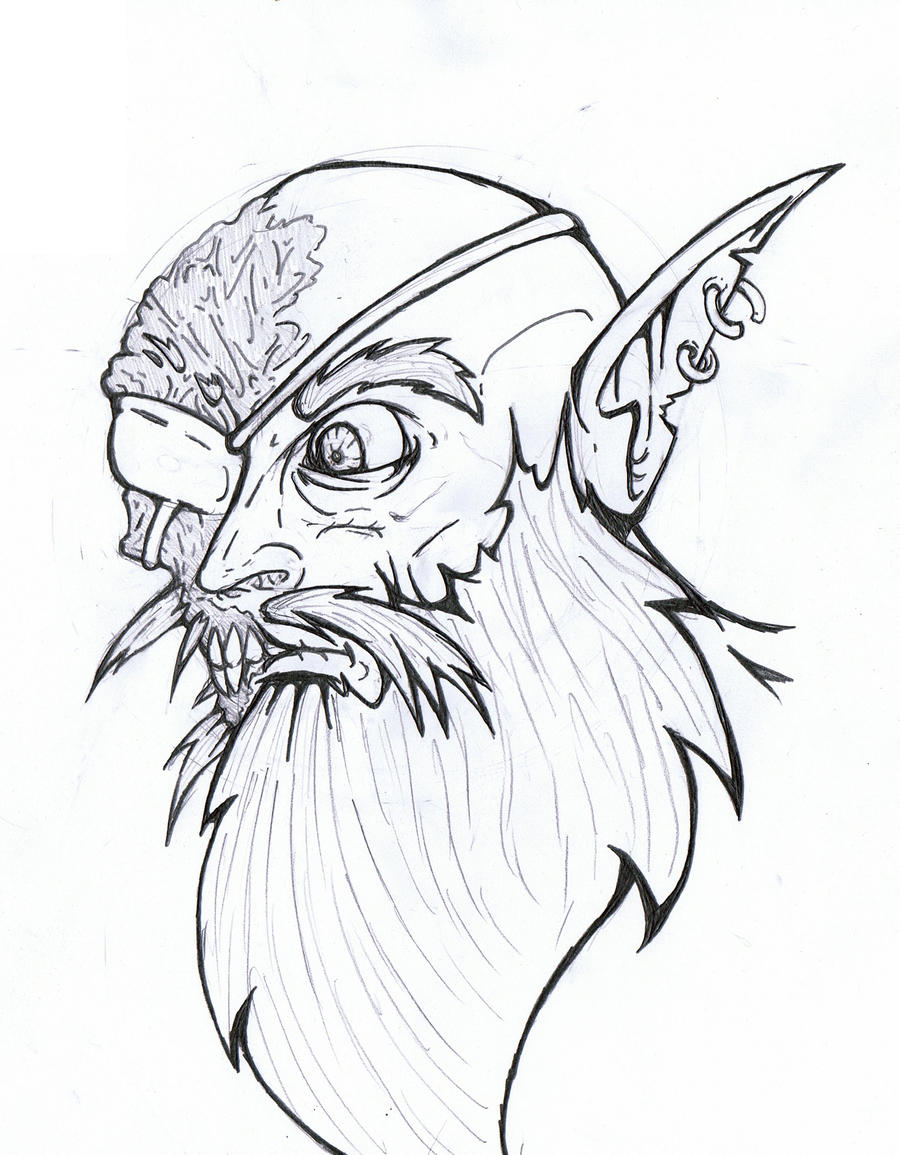
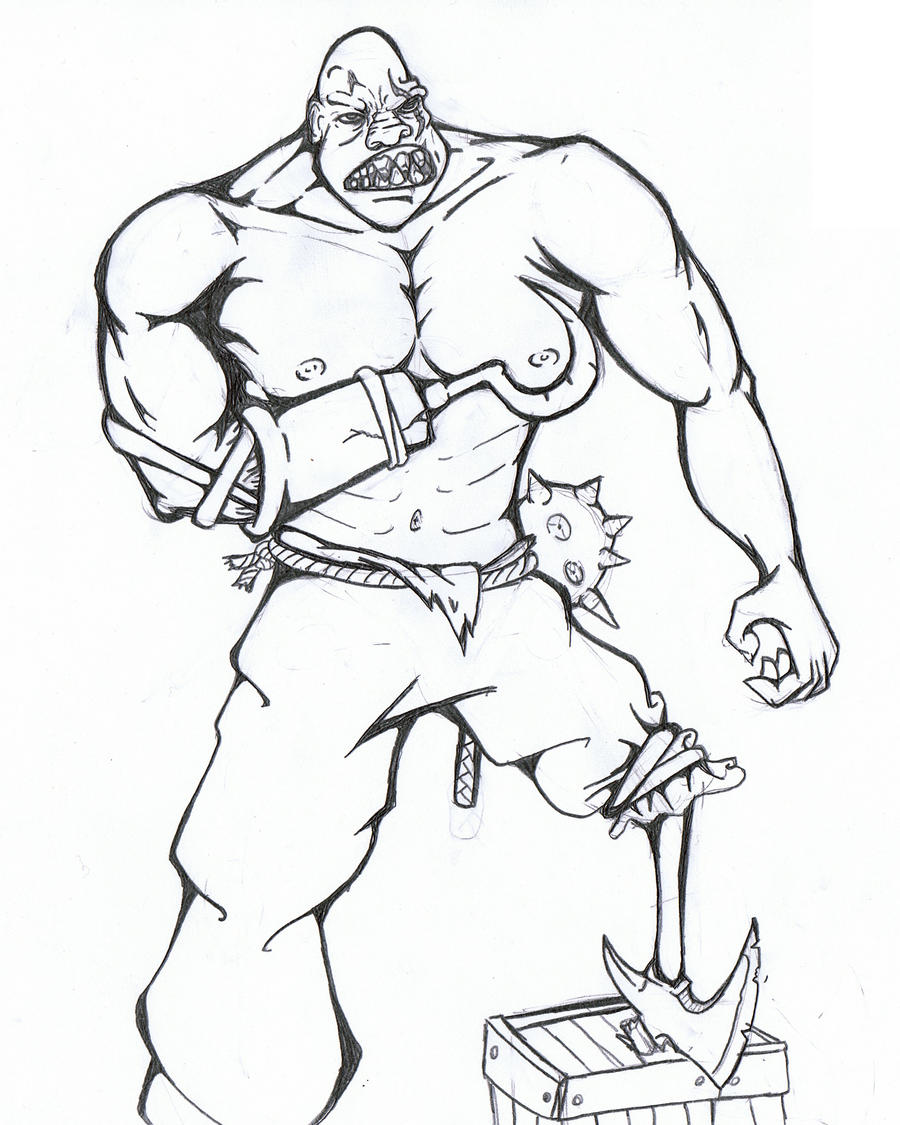
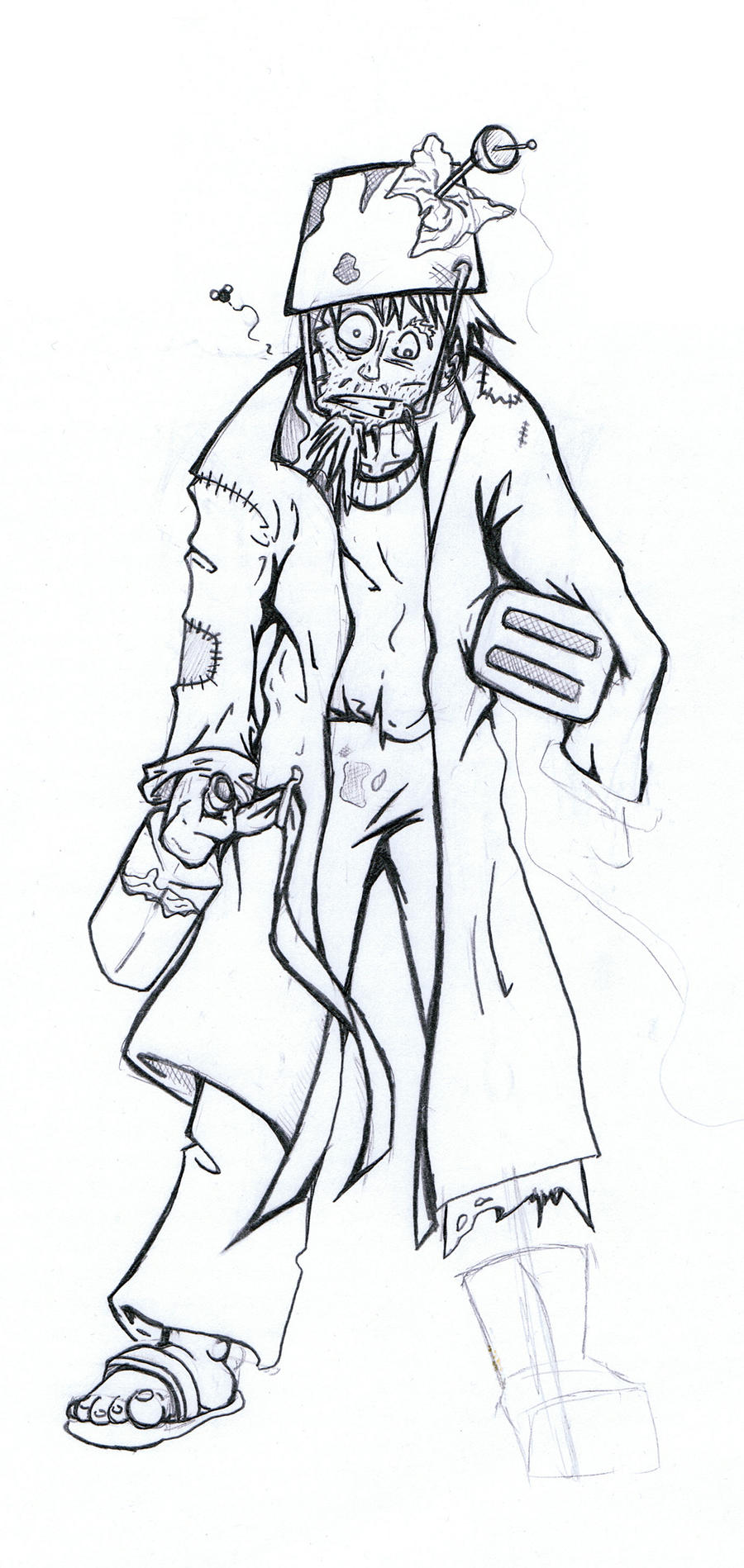
Sketches I made at work

Just a few sketches I found and scanned while moving.

The first couple here are villains from a brief pirate-based playtest I ran for Battle Royale.


These next two are a bit less clear. You ever find something you did a while ago and you can't figure out why? Or what the hell inspired it?


Monday, July 9, 2012

Another Shallow Review: Hell on Earth Reloaded


So, is horror-slash-fantasy-slash-steampunk-slash-western not enough for you? Then what about some horror-slash-fantasy-slash-dieselpunk-slash-western-slash-post-apocolyptic RPG gaming? Well, then perhaps you're the target audience of Deadlands' Hell On Earth setting.

I'm a big fan of Deadlands, if you recall the first full-length campaign I've ever completed was a Deadlands game and it was a hell of a good time. So once I heard today that Pinnacle was releasing their post-apocalyptic version, Hell On Earth, as for Savage Worlds then I was all over it. So far I've only skimmed it but just like the Savage Worlds Horror Companion I figured I'd give my first impression chapter by chapter. 

Introduction

For such a nutty, kitchen-sink setting Deadlands has always had a rather complicated to justify it's zombie cowboys on steamcycles. It's interesting stuff but I often steal from far too many different sources to keep the canon intact. Besides I already know the general background (ghost rocks fall, everybody dies) and I'm just doing a quick skim to make sure I got my money's worth so I'm skipping most of it for now.

However, the writers should be commended for how completely they address various important setting issues such as "what is used as money?" or "are there still any satellites" and how people get around the place after the disaster.

Definitely an interesting read and probably pretty essential if you want to run the setting without any modification but for now let's move on.

Makin' Heroes

Character creation is pretty familiar, no big changes and it'll be even more familiar with it if you've got experience with the original Deadlands Reloaded. All the g's are removed from skills and you've got some familiar Hindrances along with some new ones like Rad Intolerance and Mutations. All good fun.

Now one of the things I liked most about Deadlands Reloaded was that a lot of it could be used for other settings. Many of the Edges were useful for other settings and they weren't at afraid to play around with the Arcane Background rules and came up with a lot of interesting variations that could easily be used in other ways. The hucksters for instance make a good set of "wild magic" spellcasting rules and the Blessed were an interesting departure from the regular Powers-and-power-points rules.

Unfortunately so far Hell On Earth doesn't quite seem to share that potential. The majority of the Edges are pretty setting-specific things like Rad Resistance or starting off with a car. I was especially interested in the Kung Fu edge because the martial arts rules from Deadlands Reloaded were very useful for other games. Unfortunately it's clear that the rules here are meant to work with Hell on Earth's higher tech level. The Kung Fu abilities range from "Too powerful for non-fu
turistic settings" to "too powerful for any setting". Mainly because a lot of them don't actually involve martial arts or even hand-to-hand combat. A cyborg cowboy with a laser pistol is just as likely to benefit from Kung Fu as an unarmed fighter, probably more because the cowboy has the benefits of his weaponry on top of it. The worst is that one of them grants the Hardy advantage, which anyone familiar with Savage Worlds should know is way too powerful to give away as just an Edge.

Equipment

Now, the equipment chapter I quite like. It's full of some useful gear for modern or close futuristic settings like specialty ammo, modern body armor and so on.

In general when it comes to near-future settings like post-apocalypse and cyberpunk gear tends to go two ways. Either they take into account the march of current technology (see the most recent edition of shadowrun where everything went wireless) or they go with the future of the past. Technology that, while futuristic in style, is often fairly unimpressive compared to actual modern devices. Hell On Earth is definitely of the second category which I find quite nice. It's got a kind of odd charm to it and much of it makes some sense when you think about it (after all most smartphones can't survive being sat on much less a supernatural apocalypse. So what's left is the clunkier and more durable bits of tech and things cobbled together from bits and bobs.

That said some of the more advanced equipment is fairly unimpressive. Compare for instance the gyrojet rocket pistol (2d6+2 damage, 24/48/96, half damage vs armored targets) to the Peacemaker (2d6+1 damage, 12/24/48, AP 1). Now, the gyrojet has slightly higher damage (very slightly) and impressive range it's six times as expensive and much more expensive to reload not to mention even a leather vest would render it useless.

But like I said, for the most part the equipment is solid and useful. The vehicle rules especially are going to be a godsend for a lot of Savage Worlds players who might be looking for some rules on tinkering with or customizing their vehicles. It's far from completely comprehensive but it's a good start.

Setting Rules

This extremely short chapter doesn't have much to comment on, except for the scavenging rules which I'm sure will see plenty of use and seem quite serviceable, although I probably would limit the scavenging to one player with others aiding them (otherwise players are likely to rack up huge hauls).

No Man's Land

So here we have the setting's Arcane Backgrounds. You've got a pretty big variety, Doomsayers (mutant radiation priests), Junkers (techno-wizards), Sykers (psionicists), Templars (holy knights), Toxic Shamans (shamans of pollution and garbage). You've also got the harrowed who are basically unchanged from the original Deadlands.

Unfortunately unlike the basic Deadlands setting the Hell On Earth ABs are pretty darn setting-focused. The Junkers are far more powerful than your average mad scientist for example and Toxic Shamans and Doomsayers are tied integrally to the setting. The Templars seem like your average Miracle wielders but they get a selection of Edges that make them truly impressive when battling evil. They might work in a modern setting (think the Knights of the Cross from Dresden Files) but otherwise they're far too kick-ass in for most settings. Psykers are amusing (baldness is an unfortunate side-effect of their powers) and they have some good new powers (like the ability to wipe memories or mentally communicate).

The powers are fairly useful and can easily be harvested for your own use or used as-is just fine. The only one that struck me as odd was the Slow Burn power (designed for Psykers to bust up heavily armored vehicles and the like). Unfortunately it doesn't actually work very well. For instance against a toughness 10, armor 70 vehicle the power inflicts 5d10 damage...now the probabilities of dice in savage worlds can be tough to calculate but to beat 80 on a 5d10 is still pretty damn astronomical odds. Also, as written it can't even hurt an unarmored target. But otherwise some fairly useful stuff and the AB's are fairly well-designed for the setting.

Marshall's Section

There's some pretty interesting stuff going on here. We've got weird weather, rules for mutations and fear levels. All of it seems okay.

Then we've got the setting info for specific cities and locations throughout the West. I don't have anything like the time needed to actually read through all this yet but what I do see is fairly interesting.

Then afterwards we've got a big collection of monsters. Some mutated, some mechanoid, some undead and some all three at once. Again, it looks serviceable but far too detailed for me to plunge into yet.

Quick Overview

There's a couple of things that bear mentioning in regards to the quality of the book. First, the art is quite nice and although there's plenty that was probably recycled from older Hell On Earth books it's all cool and evocative. Unfortunately the layout is pretty rough. The gear is pretty awkward (the tables of gear stats are all clustered at the end of the chapter) and the No Man's Land chapter is worse. It starts off immediately with one of the arcane backgrounds with no intro or explanation, then jumps to the rules for the Harrrowed, then back to the rest of the Arcane Backgrounds. Then we've got various rules scattered throughout the book like the (extremely bare-bones) bionics rules stuck in one of the city descriptions.

The other thing that bears mentioning is price. For some reason Hell On Earth pretty darn expensive, about 40 bucks for a 200 page book. That's quite spendy when you consider how reasonably priced the core Savage Worlds material tends to be. The Print and PDF package together is over 50 dollars when many companies include PDFs for free with their book (or at least at a very small extra price). All that was too rich for me so I went with the PDF alone which is a better deal at (a still quite high) 25$.

Final Thoughts

 So, all in all it's a pretty mixed bag. There's a lot of stuff in Hell On Earth that's interesting or potentially useful but at the same time it's pretty darn expensive.

If you're a deadlands fan and you know for sure that you want to run or play in a Hell on Earth game then I'd say that the book's definitely worth picking up. You'll have a lot of fun. With minor editing it could easily be adjusted to various levels of post apocolyptic adventures. Some aspects of the setting bear a more than passing resemblance to Rifts for example (notably a high-tech conquering nation-state called the Combine with robotic minions with a skeletal motif).

However, if you're just a general fan of Savage Worlds and you're hoping to chop up the setting to use in completely different games then I don't think you'll find it very worthwhile considering the minimum price of 25 bucks.